
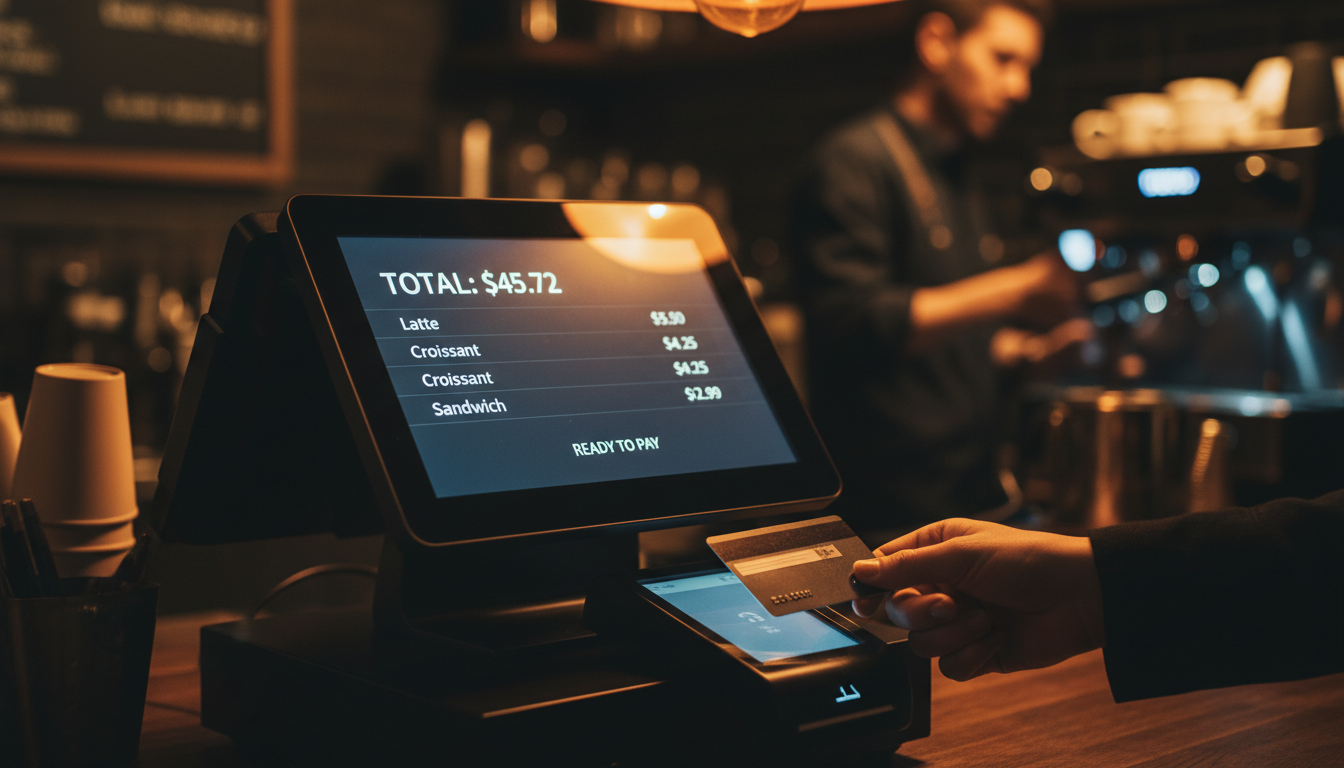
Restaurants can stop the leak of profits by auditing their statements for hidden credit card processing fees restaurants often encounter, such as PCI compliance, batch, and statement fees. Austin business owners can mitigate these costs by switching to transparent interchange-plus pricing models or implementing legal surcharge programs to pass fees directly to customers.
Every time a guest taps their card at your Austin establishment, a portion of your hard earned margin silently evaporates into a complex web of merchant services. While rising ingredient costs and labor shortages dominate the headlines, the invisible drain of payment processing fees often represents the single largest controllable expense on your profit and loss statement. Navigating the dense jargon of monthly statements feels like a full-time job; however, ignoring these line items allows processors to smuggle junk fees directly into your overhead. In this guide, we will decode the triple layer of processing costs and expose five specific fees frequently hidden in plain sight. You will learn how to identify tiered pricing traps and perform a ten minute statement audit to ensure your Austin restaurant retains every dollar it deserves.
The Invisible Profit Drain in the Modern Restaurant
Restaurant owners scrutinize the fluctuating price of a brisket case or the hourly rate of a line cook, yet many overlook the consistent erosion happening at the point of sale. While food and labor costs are visible on every invoice, a silent 3 to 4 percent drain often goes unexamined. These hidden credit card processing fees restaurants encounter are not the standard rates set by card networks, but rather the non-interchange markups that processors tuck into complex monthly statements.
The impact on the bottom line is disproportionate. Most hospitality businesses operate on thin margins, often between 3 and 5 percent. When a processor adds a 1 percent hidden markup, they are not just taking a small cut of the gross sales; they are effectively siphoning off 20 to 30 percent of the business’s net profit. At Digital Plating INC, our team of Austin based specialists understands that a merchant statement is rarely what it seems. We look beyond the surface level totals to analyze the structural inefficiencies in your payment flow. By leveraging specialized Digital Plating™ technology, we help local operators protect their margins from the technical and financial leaks that standard processors often ignore.
Decoding the Triple Layer of Payment Processing Costs
To stop the financial leak, you must first understand the anatomy of a merchant statement. Every transaction fee is a cocktail of three distinct costs, yet only one is controllable by your provider.
The first layer is Interchange. These are the wholesale rates set by the card-issuing banks. For a standard transaction, this typically hovers around 1.80 percent. This cost is non-negotiable; every processor in the country pays the same interchange rate for the same card type. The second layer consists of Assessments, which are small fees, usually around 0.14 percent, paid directly to card brands like Visa and Mastercard. Like interchange, assessments are fixed and regulated across the industry.
Fee Component | Recipient | Estimated Rate | Negotiable? |
|---|---|---|---|
Interchange | Issuing Banks | ~1.80% | No |
Assessments | Card Networks | ~0.14% | No |
Processor Markup | Service Provider | Variable | Yes |
The third layer is the Processor Markup. This is where the service provider makes their profit and, more importantly, where they bury the hidden credit card processing fees restaurants struggle to identify. Anything you see on your statement significantly above the 1.94 percent combined base of interchange and assessments constitutes the processor’s revenue.
By bundling these three distinct costs into a single, opaque rate, processors make it nearly impossible for an operator to see the true markup. If you are considering leaving Toast or performing a Clover Audit, you must demand a breakdown that separates these layers. Without this structural clarity, a processor can quietly expand their margin by reclassifying transactions or adding service premiums. To protect your bottom line, contact us today for a transparent view of your actual cost of acceptance.
5 Junk Fees Smuggled Into Your Monthly Statement

While the triple layer of costs provides a framework, the processor’s markup often hides a series of arbitrary charges that add no value to your operations. These line items are frequently named to sound like government regulations or industry requirements, but in reality, they are pure profit for the provider. Identifying these hidden credit card processing fees restaurants pay requires a discerning eye for five specific line items.
PCI Compliance Fees: Most processors charge between $10 and $30 monthly for PCI Management. The irony is that even when you complete your annual self assessment questionnaire and demonstrate full compliance, many providers continue to bill this fee. It is essentially a charge for the privilege of securing your own data, even though the security work is performed by you and your POS vendor.
Batch Header Fees: Every night when your POS system closes out and transmits the day’s transactions to the bank, processors may tack on a batch fee, usually ranging from $0.10 to $0.30 per occurrence. For a busy Austin bistro operating 30 days a month, this adds an extra $9.00 to the bill for an automated process that costs the processor next to nothing.
Statement Fees: It is common to see a charge of $5.00 to $15.00 for the production of a monthly statement, even if you only receive a digital version via email. In a modern digital economy, charging a merchant to see their own billing data is an outdated practice designed solely to pad the processor's bottom line.
Monthly Minimums: Processors often set a minimum revenue target they expect to earn from your account. If your restaurant has a slow month, perhaps due to seasonal shifts or local Austin weather events, and your generated fees fall below a threshold (often $25.00), the processor will charge you the difference as a penalty for not being busy enough.
Non-Qualified Surcharges: This is the most damaging downgrade trap. If a transaction involves a rewards card, a corporate card, or is keyed in manually, the processor may reclassify it as Non-Qualified. This allows them to add an additional 1.5% to 2% on top of the base rate. The processor justifies this by claiming the card is higher risk or higher cost, but they often keep a significant portion of that surcharge as pure profit.
Junk Fee Type | Common Cost Range | Purpose |
|
|---|---|---|---|
PCI Compliance | $10.00 – $30.00 / mo | Administrative overhead | |
Batch Header | $0.10 – $0.30 / day | Daily settlement charge | |
Statement Fee | $5.00 – $15.00 / mo | Accessing billing data | |
Monthly Minimum | $25.00 – $50.00 / mo | Penalty for low volume | |
Non-Qualified | 1.50% – 2.00% / trans | Markup on rewards cards |
These charges quickly turn a seemingly low rate into a significant financial burden that erodes your margins. If your current provider is unwilling to justify these line items, it may be time to consider Leaving Toast or another bundled provider that relies on these opaque tactics. To see how these costs impact your specific business, Contact us today for a detailed analysis of your merchant statement.
The Tiered Pricing Trap: How Processors Hide the True Cost
Tiered pricing serves as the primary vehicle for hidden credit card processing fees restaurants encounter. In this model, the processor buckets transactions into three arbitrary categories: Qualified, Mid-Qualified, and Non-Qualified. While the advertised "Qualified" rate may look appealing, it typically only applies to basic debit cards. The processor maintains total control over which transactions fall into higher tiers, often pushing rewards cards, corporate cards, and even standard credit cards into the "Non-Qual" bucket without specific justification.
This structure allows the provider to hide the actual interchange rate set by the banks. For instance, if a card has a wholesale cost of 1.90%, the processor might label it Non-Qualified and charge you 3.50%, pocketing the 1.60% spread as pure profit. Operators should scan their monthly statements for these specific terms; seeing "Non-Qual" is an immediate red flag that you are overpaying.
Pricing Model | Transparency Level | How Fees Are Calculated |
|---|---|---|
Tiered Pricing | Low | Arbitrary buckets hide true bank costs. |
Interchange Plus | High | Wholesale bank rates are passed through with a fixed markup. |
Interchange Plus is the only transparent alternative. It separates the non-negotiable bank costs from the processor’s flat fee, ensuring you never pay more just because a customer used a premium rewards card. If your current provider relies on tiered buckets, it may be time for a Clover Audit or to explore the benefits of Leaving Toast. To see exactly how much you are losing to these tiers, Contact us today for a structural analysis of your statement.
Texas Restaurant Realities: The Local Surcharge Struggle

The struggle to maintain profitability has reached a tipping point for many Austin operators. From neighborhood cafes in East Austin to high volume bistros downtown, the pressure to offset hidden credit card processing fees restaurants face has led to a surge in surcharging and cash discount programs. These programs typically add between 2.5 and 4 percent to the guest’s bill to cover the cost of acceptance. While the Texas legal landscape regarding surcharges has been historically complex, current regulations generally allow them provided they do not exceed the actual cost of the transaction. Many local businesses, however, prefer cash discount models to navigate these rules while attempting to reclaim lost margins.
Passing the bill directly to the guest is a blunt instrument that often creates friction at the point of sale. In a competitive hospitality market like Austin, a surprise fee at the bottom of a receipt can alienate loyal customers and damage your brand’s reputation. A more sophisticated alternative is to optimize the back end processing configuration rather than passing the burden forward. Instead of penalizing the customer, operators can reduce their effective rate by Leaving Toast or performing a Clover Audit to identify exactly where markups are being added. If your business is feeling the squeeze of rising interchange costs, Contact us today to explore how optimizing your payment flow can protect your margins without compromising the guest experience.
How to Perform a 10 Minute Statement Audit

To regain control over your margins, you must look past the summary page of your merchant statement. A manual audit takes less than ten minutes and provides the clarity needed to decide if your current processing relationship is sustainable.
First, calculate your effective rate. Locate the total fees paid for the month and divide that figure by the total volume of sales processed. For an Austin restaurant with a standard mix of card types, this rate should realistically hover between 2.2% and 2.6%. If your effective rate is over 3.0%, your business is likely losing thousands of dollars annually to unnecessary markups. An effective rate this high is a primary indicator that you should consider a professional Clover Audit to identify the specific leak.
Second, scrutinize the individual line items for the words Fee or Service. In a transparent statement, the vast majority of charges should be clearly labeled as Interchange. Any line item titled Service Fee, Admin Fee, or Program Fee is a red flag. These are almost always discretionary markups that constitute the hidden credit card processing fees restaurants are charged to pad the processor’s bottom line.
Finally, search for flat dollar amounts. Look for recurring charges like $15.00, $30.00, or $95.00. These are fixed junk fees, such as statement fees or monthly minimum penalties, which have no relation to the actual cost of moving money. If these manual checks reveal a complex web of arbitrary charges, Leaving Toast or your current bundled provider may be the most direct path to profitability. For a detailed breakdown of your specific statement, Contact us today to speak with a specialist.
Beyond the Swipe: Using Digital Plating to Protect Margins
Digital Plating™ technology provides a structural solution to margin erosion by integrating QR ordering and AI automation directly into your workflow. These tools do more than modernize the guest experience; they actively shift transaction types away from high-fee manual entries. When customers use mobile ordering, the system can often leverage secure payment protocols that qualify for better rates, effectively bypassing the hidden credit card processing fees restaurants suffer under legacy setups.
Our team in Austin works with you to replace opaque billing with efficient, high-performance payment flows. If you find your current provider is hindering your growth, Leaving Toast or performing a targeted Clover Audit is a strategic move toward transparency. To support this transition, we offer specialized business financing options that allow you to upgrade your front-of-house tech and back-end processing without an upfront capital drain. Contact us today to learn how local expertise can transform your payment processing from a liability into a competitive advantage.
Understanding where your revenue goes is the first step toward protecting your restaurant's bottom line. By identifying these hidden fees and demanding transparency, you can ensure your Austin business remains profitable. While self auditing is a great start, the payment industry remains complex and ever changing. If you want expert help securing the best rates for your establishment, you can learn more about our team and how we support local merchants. We are here to help you navigate these costs effectively.