

Restaurants often lose significant profit to hidden fees, chargebacks, and inefficient transaction models; this creates a substantial restaurant payment processing revenue loss over time. To reclaim these funds, owners should audit their monthly statements for undisclosed charges and switch to processors that offer transparent, interchange-plus pricing structures.
Running a high-volume restaurant in Austin requires precision in every department, yet many owners overlook the silent drain occurring at the point of sale. While you focus on plate costs and labor margins, your payment processor may be eroding your bottom line through complex fee structures and opaque billing cycles. These minor discrepancies might seem negligible on a single ticket; however, they quickly accumulate into thousands of dollars in lost annual revenue that belongs in your bank account. Digital Plating INC understands that technical efficiency is the foundation of profitability. In this guide, we will examine the hidden fees eating your profits and provide a clear framework for calculating your actual processing costs. You will discover how modern payment technology can eliminate these leaks, ensuring every dollar earned translates directly to your growth.
The Silent Leak: Why Restaurant Payment Processing Revenue Loss Happens
Managing a restaurant in Austin requires a meticulous eye on prime costs. Most operators can tell you their food cost percentage or their labor-to-sales ratio down to the penny. However, a significant number of businesses ignore a silent leak that often drains 3% to 5% of total revenue directly at the point of sale. This restaurant payment processing revenue loss stems from a combination of transparent fees and invisible operational inefficiencies that many owners simply accept as the cost of doing business.
The Professional Accountants Association (PAA) often references the 30% rule, noting that once a restaurant’s prime costs exceed 60% to 65% of sales, the remaining 30% margin must cover every other expense, including rent, utilities, and marketing. In this tight financial environment, every basis point lost to a payment processor directly erodes the bottom line. It is not just about the percentage taken per swipe; it is about the broader ecosystem of the transaction.
Silent leaks manifest in ways that a standard merchant statement will not show. These include:
Labor hours wasted on manual end-of-day reconciliation when systems do not sync.
Slower table turns caused by legacy hardware that takes ten seconds to process a chip instead of two.
Revenue lost to manual entry errors when POS integrations fail.
Furthermore, industry standards indicate that approximately 5% of orders are compromised due to technical downtime or payment disputes. When a system lags during a Saturday night rush, the resulting loss is rarely just the processing fee. It is the entire ticket value plus the potential lifetime value of a frustrated guest. If you suspect your current setup is costing you more than it should, you can contact Digital Plating INC for a detailed analysis of your operational costs. Understanding the difference between visible statement charges and these structural leaks is the first step toward reclaiming your margins.
Deciphering the Statement: Hidden Fees That Eat Your Profits

Austin restaurateurs often prioritize transparency in their supply chain; it is time to apply that same level of scrutiny to merchant statements. To stop restaurant payment processing revenue loss, you must first understand the jargon used to disguise profit margins. Many providers bury costs in obscure line items that appear minor but compound over thousands of transactions. Common culprits include PCI non-compliance fees, which can range from $20 to $100 per month simply because a security survey was not completed. You may also notice batch header fees, charged every time you settle your terminals, alongside statement fees and IRS reporting fees. These are frequently unnecessary charges for administrative tasks that should be part of your standard service.
Fee Category | Typical Impact | Purpose of the Charge |
|---|---|---|
PCI Non-Compliance | $20 - $100/mo | Penalty for missing security documentation |
Batch Header Fee | $0.15 - $0.30/day | Processing fee to close out the daily batch |
IRS Reporting Fee | $5 - $20/mo | Fee for filing the 1099-K with the government |
Statement Fee | $5 - $15/mo | Administrative cost to generate your monthly bill |
The pricing model you utilize dictates how much of this leak remains hidden. Most modern processors favor flat-rate or blended pricing for its perceived simplicity. However, these rates often mask the fact that you are overpaying for debit transactions. Debit cards cost the processor significantly less to route than premium rewards cards. In a blended model, you pay the same high percentage regardless of the card type, allowing the processor to capture the difference as pure profit.
As of 2025, the average interchange rate across all card types is approximately 2.35 percent. If your flat rate is 2.9 percent plus a per-transaction fee, you are paying a significant premium on every dollar. Conversely, Interchange Plus pricing passes the raw cost of the card directly to you with a transparent, fixed markup. For owners currently leaving Toast or similar restrictive setups, shifting to Interchange Plus is the most effective way to gain clarity. If your current statement is too complex to decipher, a professional Clover Audit can pinpoint exactly where these hidden percentages are eroding your profitability. To better understand your specific fee structure, you can contact Digital Plating INC for a line by line statement review.
The Real Cost of Payment Tech Downtime in Austin
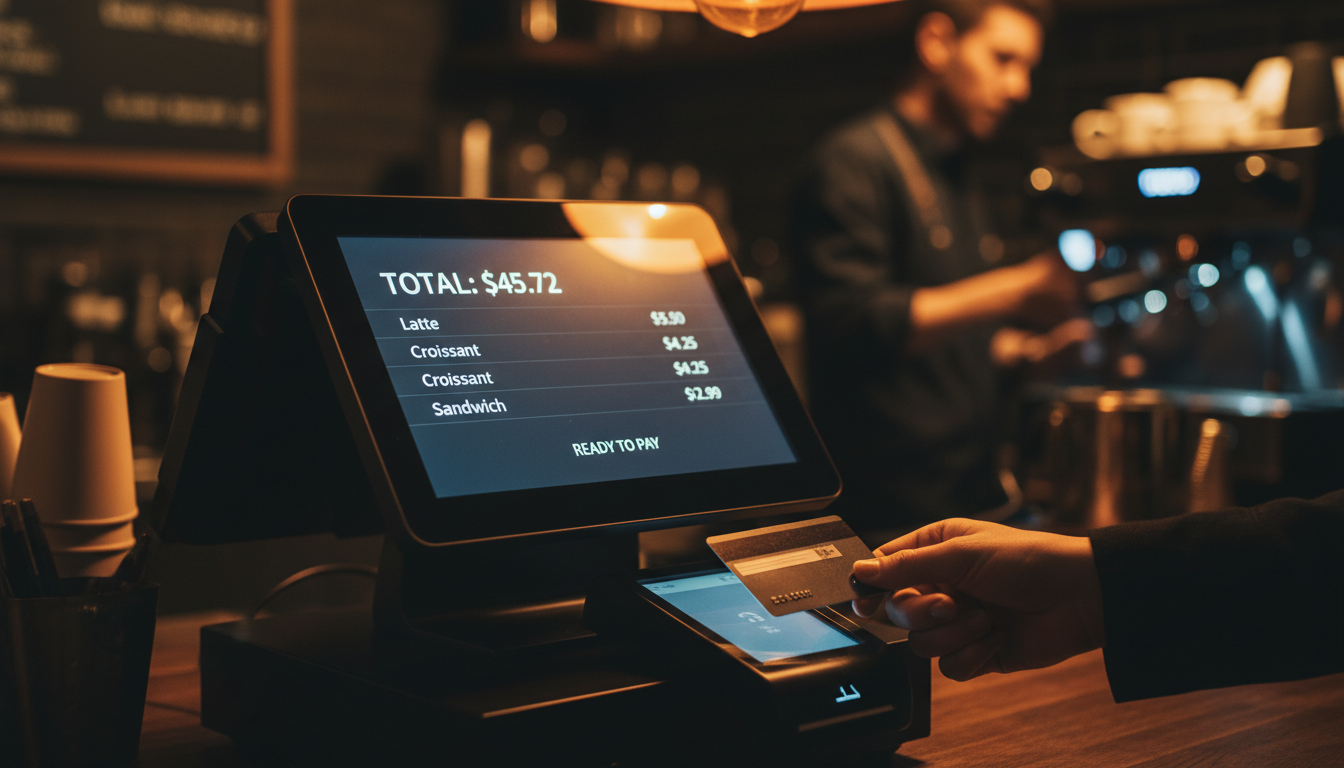
Understanding your statement is only half the battle. In a high-volume market like Austin, the physical reliability of your hardware is just as critical as your interchange rate. A POS crash during a peak Saturday night on South Congress or in the middle of a SXSW rush is more than a technical nuisance; it represents catastrophic revenue loss that you can never recover. Every minute your system stays down, guests walk out and your staff loses tips, which often leads to immediate staff turnover issues.
Slow transaction speeds create a different kind of leak by hindering table turns. If your hardware adds just thirty seconds to every payment, you might lose an entire seating cycle during a busy shift. Furthermore, legacy systems often lack robust offline processing capabilities. If your internet connection flickers, these systems stop accepting payments entirely, forcing staff to turn away customers or risk manual credit card recording. According to Verifone data, approximately 5 percent of orders are either disputed or completely lost during technology failures. This is a direct hit to your gross revenue that no amount of tip-pooling can fix. To ensure your business is protected against these technical vulnerabilities, you can contact Digital Plating INC for a system reliability audit. Local businesses require local support that understands the high stakes of an Austin peak hour.
How to Calculate if Your Processor is Overcharging You
To stop restaurant payment processing revenue loss, you must move beyond looking at individual transaction rates and calculate your Effective Rate. This is the single most important metric for an operator because it accounts for every hidden fee, batch charge, and incidental surcharge discussed earlier. It represents the true cost of every dollar you bring in through your POS system.
To find this number, take your most recent monthly merchant statement and follow these steps:
Locate the total amount of fees charged for the entire period. This should include all transaction fees, monthly service fees, and surcharges.
Locate your total gross card sales volume for that same period.
Divide the Total Fees by the Total Sales.
Multiply the result by 100 to get your percentage.
Calculation Component | Example Data |
|
|---|---|---|
Total Monthly Card Sales | $100,000 | |
Total Fees Charged | $3,800 | |
Effective Rate | 3.8% |
Most high volume restaurants should operate within the 2.5 to 3.5 percent range. If your calculation results in a number significantly higher than 3.5 percent, your business is actively losing margin to inefficient pricing.
During your review, look specifically for Non-Qualified or Mid-Qualified surcharges. These line items indicate that your processor is penalizing you based on the type of card your customer presents, such as high end rewards cards or corporate cards. In a city like Austin, where tech professionals and travelers frequently use premium cards, these surcharges can quietly add hundreds of dollars to your monthly bill. If these penalties are littering your statement, you can contact Digital Plating INC to determine if a more transparent pricing structure could reclaim those lost funds.
Reclaiming Your Revenue with Digital Plating Technology

Identifying your effective rate reveals the extent of the leak, but patching it requires shifting from passive processing to active Digital Plating™ technology. Unlike generic processors that merely facilitate transactions, Digital Plating INC focuses on operational recovery. This is achieved through AI automation and integrated QR ordering systems that directly address the high cost of manual service. In many Austin venues, manual order entry and reconciliation tasks consume hours of staff time every week. By automating these workflows, restaurants typically reduce labor-related expenses by $1,000 to $2,000 monthly, effectively turning a technical expense into a labor-saving asset.
Moving away from restrictive, proprietary ecosystems is often the most significant financial pivot an owner can make. For a standard two terminal restaurant, the cumulative savings from lower interchange markups and eliminated hidden fees often total between $20,000 and $30,000 over a five year period. Operators who are leaving Toast or similar closed systems often find that these reclaimed funds provide the necessary capital for back of house upgrades or menu expansion. Beyond the raw percentages, this transition removes the technical debt associated with hardware that only works with a single, high priced provider.
The silent portion of restaurant payment processing revenue loss also includes the opportunity cost of technical failures during peak periods. Because we are based in Austin, we provide 24/7 local support tailored to the unique rhythms of the Central Texas market. When a system goes dark during a major festival or a busy Saturday night rush, having a local partner ensures that downtime is mitigated immediately. Proactive system monitoring and robust POS integrations prevent the friction that leads to lost tickets and employee frustration. To see how these technologies can be applied to your specific floor plan, you can contact Digital Plating INC for a tailored consultation. This shift ensures your technology functions as a profit center rather than a constant drain on your margins.
Actionable Steps to Switch and Save Without Disrupting Operations
The fear of a system blackout often traps Austin restaurant owners in unfavorable contracts. However, staying with an inefficient provider to avoid a temporary headache only guarantees continued restaurant payment processing revenue loss. The transition to a modern, transparent system is often faster than operators anticipate, particularly if your current POS hardware is non-proprietary. If you are not locked into specific tablets or terminals, switching can be as simple as a software update and a new gateway configuration.
To migrate your processing without disrupting the Friday night rush, follow this operational checklist:
Perform a Clover Audit to identify exactly where your current provider is hiding margins.
Verify hardware compatibility; if your equipment is open-source, you can often keep your existing devices.
Schedule the cutover during your slowest window, such as a Monday morning, to ensure staff have time to adjust.
Parallel run the new system alongside the old one for a few hours if possible to verify data syncing.
Securely export your historical sales and tax data from the old processor before closing the account.
A professional audit is the most critical step in this process. It does more than just lower future rates; it uncovers historical overcharges and provides the documentation needed to hold your current provider accountable. If you are currently leaving Toast or another restrictive platform, we can help you navigate the data export requirements. To begin a risk-free evaluation of your current setup, you can contact Digital Plating INC for a comprehensive review of your merchant environment and a roadmap for reclaiming your lost revenue.
Recognizing how hidden processing fees impact your bottom line is essential for maintaining a healthy restaurant business. Once you identify where your revenue is being diverted, you can take meaningful steps to reclaim those profits and reinvest them into your growth. If you want expert help analyzing your statements or navigating a switch to a fairer provider, our team at Digital Plating INC. is available to guide you. Taking the first step toward Leaving Toast can help ensure your revenue stays where it belongs.