
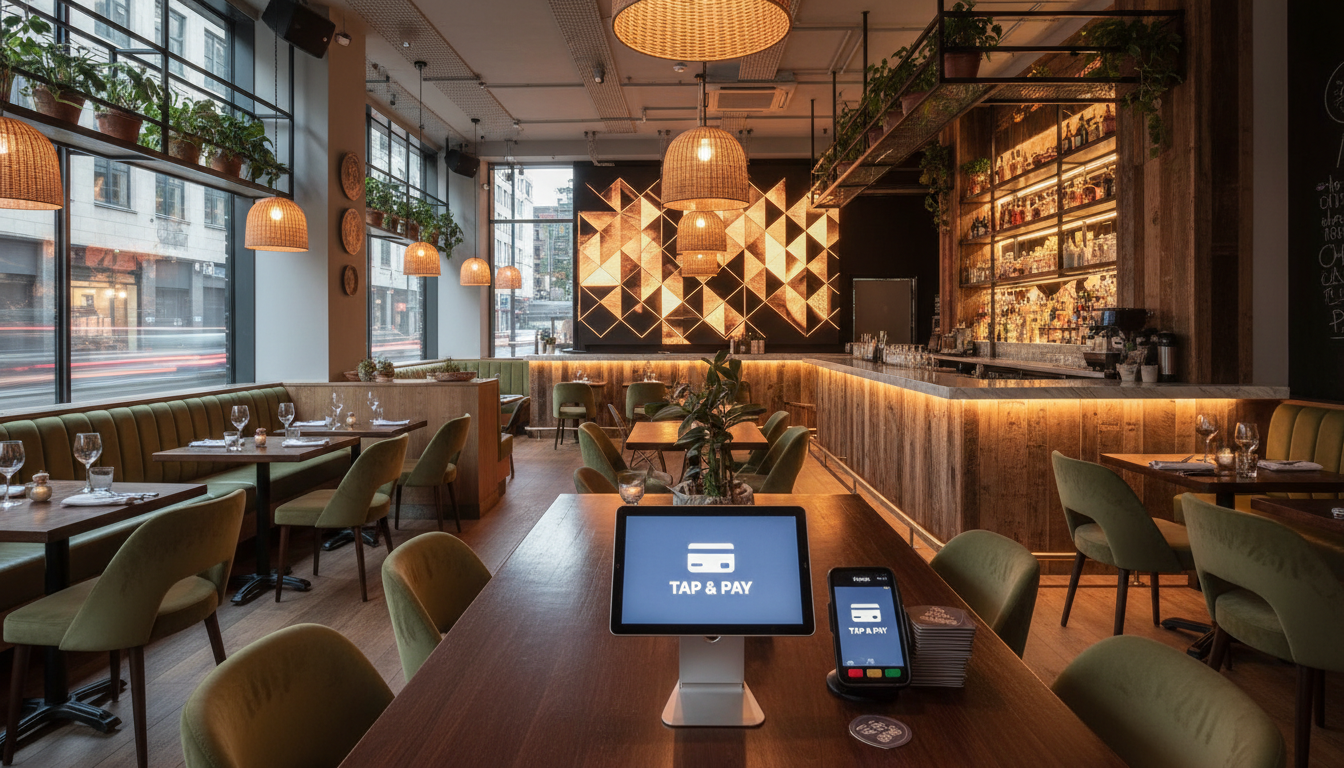
Alternative funding options often function as restaurant business loans percentage of sales models where repayment is automatically deducted from daily credit card receipts. This revenue-based structure provides financial flexibility by scaling payments with your actual income; consequently, owners are not burdened by rigid monthly obligations during slow seasons.
Running a high-volume Austin restaurant means navigating a landscape where revenue fluctuates by the season, the weather, or the latest festival. Traditional bank loans, with their rigid monthly mandates, often feel like a weight around your neck during the inevitable slow shifts. This disconnect between fixed overhead and variable income can stifle your growth before you even get the chance to scale your concept. We believe capital should move at the speed of your service, which is why understanding repayment models based on a percentage of sales is vital for modern hospitality operators. In this guide, we will break down the mechanics of flexible funding, compare factor rates to standard interest, and explore how your POS data can unlock growth capital that breathes with your daily intake. You will learn to leverage financing that supports your expansion without compromising your operational stability.
Why Traditional Bank Loans Often Struggle in the Austin Hospitality Scene

Austin's hospitality landscape is uniquely competitive. In high-demand neighborhoods like South Congress or East 6th, the barrier to entry is steep, requiring significant upfront capital just to secure a lease and cover rising overhead. While traditional bank loans offer lower interest rates on paper, they are fundamentally designed for predictable, steady industries. A bank expects a fixed monthly payment regardless of whether it is a record-breaking week during SXSW or a quiet Tuesday in mid-January.
This rigidity creates a massive friction point for local operators. Traditional lenders typically demand credit scores above 680, extensive collateral, and years of tax returns. For a growing Austin café or sports bar, tying up personal property as collateral for a rigid term loan is often a significant risk. Restaurant cash flow is inherently fluid; it shifts with seasonal tourism, Longhorn home games, and even sudden Central Texas weather events. When revenue dips, a fixed bank payment can cause a severe cash crunch, threatening daily operational efficiency.
Modern operators are increasingly looking for Capital Growth solutions that better align with these fluctuations. Instead of the static structure of a conventional bank note, seeking restaurant business loans percentage of sales models allows for a more symbiotic relationship between debt service and revenue. By moving away from fixed installments and toward a system that mirrors the actual pace of the dining room, businesses can maintain the liquidity needed to navigate Austin’s volatile market cycles. If you are currently leaving Toast or other POS providers, it is an opportune moment to evaluate how your underlying technology can support this more agile approach to funding through a dedicated payment processing specialist.
Understanding Restaurant Business Loans Based on a Percentage of Sales
Traditional lending is built on the concept of a static term, but the modern alternative is built on revenue flow. To understand restaurant business loans percentage of sales, you must first distinguish between a debt obligation and a purchase of future assets. Revenue-based financing and merchant cash advances (MCAs) are technically not loans in the traditional legal sense. Instead, a provider purchases a specific dollar amount of your future credit card sales at a discount. You receive a lump sum of capital upfront, and the provider is repaid through a set percentage of your daily merchant processing volume.
The mechanism that makes this possible is known as split funding. When your POS system batches out at the end of the night, your processor automatically divides the funds. A predetermined percentage, often ranging from 10 percent to 20 percent, is diverted to the funding provider, while the remaining balance is deposited directly into your business operating account. This process is handled entirely through the underlying technology, which eliminates the need for manual bookkeeping or the risk of missing a payment due to human error.
Unlike the rigid requirements of a bank, these sales-based models do not usually require physical collateral like real estate or equipment liens. They are secured by the projected performance of the business itself. While the effective cost can be higher than a traditional loan, reaching 30 to 40 percent in some cases, the value lies in the lack of personal property liens and the speed of access to capital. For an Austin business owner looking at Capital Growth solutions, this agility often outweighs the higher rate, especially when a time-sensitive opportunity arises, such as securing a prime spot at a local festival or replacing a walk-in cooler during a Texas heatwave.
How the Repayment Flex Works During Slow and Busy Seasons
This dynamic repayment structure directly addresses the seasonality inherent in the Austin hospitality market. Consider a local gastropub near the University of Texas. On a quiet Tuesday in late January, when the dining room is half empty, the business might only process $1,500 in credit card sales. With restaurant business loans percentage of sales, the repayment is scaled to that specific day's performance. If the agreed split is 10 percent, the business only pays $150. This ensures the owner retains enough liquidity to cover payroll and utility costs during slow periods without the stress of a looming fixed debt obligation.
Contrast this with a record-breaking Saturday during a Longhorn home game. If that same gastropub processes $15,000 in a single day, the repayment automatically adjusts to $1,500. While the payment is larger, the business has the surplus cash flow to handle it comfortably. This flexibility eliminates the cash crunch often triggered by traditional bank loans, where a high fixed payment remains due even if a sudden ice storm or seasonal dip stalls revenue. By utilizing Capital Growth solutions, operators can protect their daily operating capital. The technology ensures that the debt service never outpaces the actual rhythm of the business, providing a built-in safety net for volatile months.
Evaluating the True Cost: Interest Rates vs Factor Rates

Evaluating the true cost of capital requires looking beyond the monthly payment amount to understand how the total obligation is calculated. Traditional bank products utilize an Annual Percentage Rate (APR), where interest is applied to the declining principal balance. Conversely, revenue based financing uses a factor rate, a fixed decimal multiplier applied to the total amount advanced. For example, a $50,000 advance with a 1.25 factor rate creates a fixed repayment obligation of $62,500. Unlike an APR, this cost does not decrease if the balance is paid off early, because the provider has essentially purchased a set amount of future receivables at a discount.
Operators must be realistic about the effective cost of these Capital Growth solutions. While a traditional loan might hover in the single digits, the effective APR of sales-based funding often ranges from 30 to 40 percent. This premium covers the increased risk the provider takes by forgoing physical collateral and the significant "speed to lead" advantage. In the Austin market, where a prime vacancy on East 6th or a seasonal opportunity at a major festival can disappear in days, the ability to secure funding in 24 to 48 hours is often more valuable than a lower interest rate that takes three months to approve. Because these are technically not loans but purchases of future assets, they do not typically require a lien on your personal residence or business equipment, preserving your borrowing capacity for other needs.
When reviewing restaurant business loans percentage of sales agreements, use this checklist to ensure transparency:
Identify the total repayment amount (principal multiplied by factor rate).
Verify the daily or weekly percentage holdback from your merchant processing.
Check for "administrative fees" or "origination fees" that are deducted before you receive the funds.
Confirm if there are any penalties for periodic low-sales days.
Ask for the estimated term based on your current processing volume.
Comparing Fixed Monthly Payments vs Percentage of Sales Repayment
Selecting the right financing model requires weighing the immediate speed of access against the long-term cost of capital. Traditional bank loans often mandate a personal credit score of 680 or higher, making them inaccessible for many newer operators or those who have leveraged their personal credit to launch. These institutions also demand extensive documentation, including three years of tax returns and a detailed business plan, which can result in a waiting period of several months.
In contrast, restaurant business loans percentage of sales models prioritize recent merchant history over static credit scores. The application process is streamlined; funding decisions often occur within a 4 to 48 hour window. This allows businesses to act on time-sensitive opportunities, such as purchasing discounted inventory or managing emergency repairs, without the bureaucratic delays of a conventional lender.
Feature | Traditional Bank Loan | Sales-Based Repayment |
|---|---|---|
Minimum Credit Score | Typically 680+ | Often 500 to 550+ |
Collateral Required | Property, equipment, or personal assets | None (secured by future sales) |
Approval Timeline | 30 to 90 days | 4 to 48 hours |
Repayment Structure | Fixed monthly installments | Variable percentage of daily batch |
The impact on personal liability is perhaps the most significant differentiator. Conventional loans typically require a personal guarantee or a lien on physical property, such as your home or specific kitchen equipment. Sales-based Capital Growth solutions generally avoid these encumbrances. Because the provider is purchasing a portion of future credit card receivables, the transaction is tied to the business performance rather than the owner's personal assets. This approach preserves your personal credit standing and keeps your property unencumbered, providing a layer of protection that fixed-term debt cannot match. For those leaving Toast or other POS providers, transitioning to a system that integrates these flexible repayments directly into the daily batch process simplifies the path to expansion.
How Digital Plating Integrates Capital Growth With Your POS

Digital Plating INC streamlines the expansion process by embedding capital access directly into the merchant environment. For an Austin cafe or a multi-location boutique, the friction of traditional debt often stems from the administrative burden of tracking payments and managing bank transfers. By utilizing Digital Plating™ technology, the friction is removed entirely. Because the funding is native to the payment processing stack, the system executes the split at the moment of the daily batch.
This automation is a core component of our Capital Growth solutions. There is no manual check-writing, no calendar reminders for ACH scheduling, and no risk of late fees due to oversight. The software handles the diversion of funds based on the agreed-upon restaurant business loans percentage of sales model, ensuring that the repayment scales perfectly with that day's guest count. When a venue experiences a high-volume weekend during a local festival, the technology captures the higher repayment instantly; during a slower period, it scales back without requiring any manual intervention from the owner.
If you are currently leaving Toast or other POS providers, you likely understand the frustration of disconnected financial tools. Working with a payment processing specialist who integrates funding into the POS allows you to reclaim hours previously spent on bookkeeping. This shift moves the focus from debt management back to hospitality and operational excellence. By aligning the financing with the actual pulse of the business, Austin operators can scale their footprint without the rigid constraints of traditional lending or the administrative headache of manual repayment schedules.
Securing funding that adapts to your sales volume provides the breathing room needed to expand without the pressure of fixed monthly payments. This approach ensures your restaurant stays resilient during fluctuations, allowing you to focus on quality and service rather than debt. If you would like professional assistance in navigating these financial options, Digital Plating INC. is available to provide expert insights. You can start by reviewing our approach to Capital Growth to see how flexible funding can work for your unique business goals.